 Türkçe
 English
 Русский
 العربية
What Jobs Are Portable Compressors Used For?
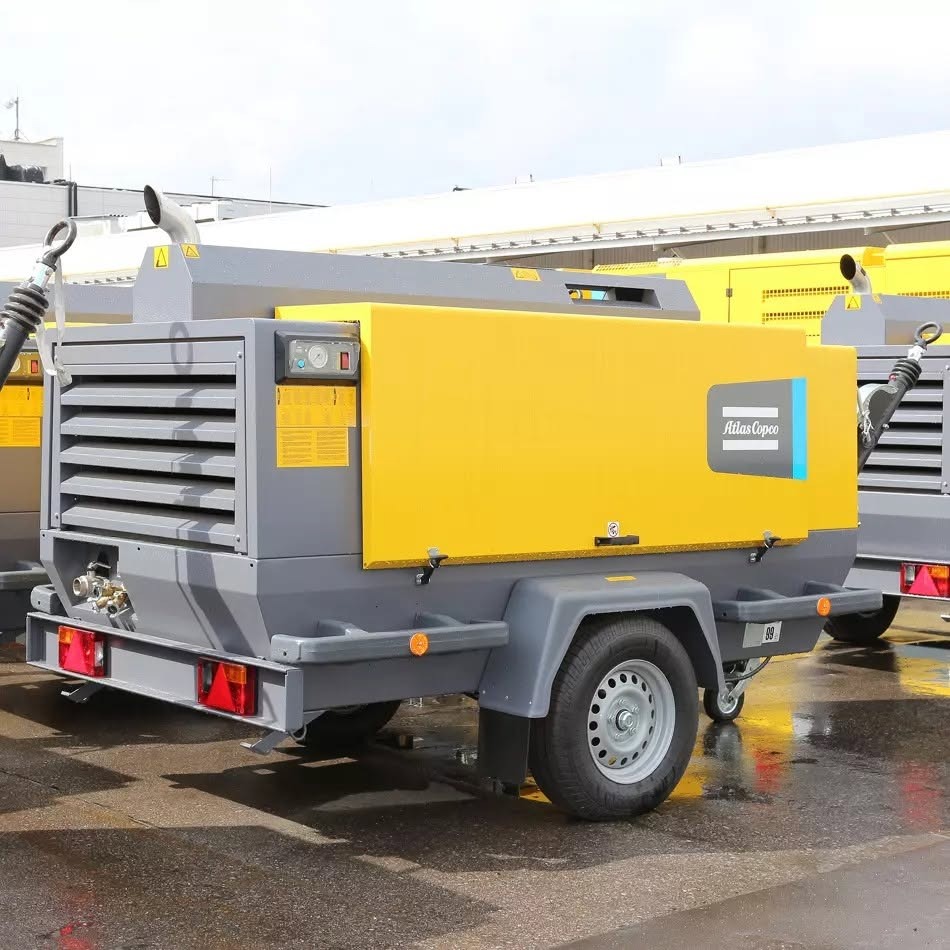
A portable compressor is a mobile piece of equipment that supplies compressed air on site without requiring a fixed compressor room. It is commonly used in construction, road maintenance, infrastructure, mining, sandblasting, drilling, industrial maintenance, shipyards, energy facilities, and temporary production areas. The main advantage of these machines is that they can be moved between different work locations and directly power equipment that requires compressed air. A portable diesel compressor becomes an important solution in projects where the electrical infrastructure is limited, the work location changes frequently, or a temporary need for high airflow arises.
Portable compressors are most commonly used to operate breakers, drills, blasting guns, spraying equipment, pneumatic hand tools, and certain specialized field machines. Typical applications include powering asphalt or concrete breaking equipment in road and infrastructure projects, supporting drilling systems in tunnel and mining operations, establishing temporary maintenance air lines in industrial facilities, and carrying out sandblasting operations for surface preparation. For this reason, selecting a portable compressor requires more than evaluating mobility; the air demand of the equipment it will operate must also be assessed clearly.
On construction sites, portable compressors offer a practical way to accelerate workflow. Compressed air may be required at several locations across the site, and installing a fixed air line is not always economical or practical. The ability to move the compressor around the site provides a major advantage for foundation excavation, concrete breaking, surface cleaning, anchor preparation, formwork removal support, and temporary maintenance work. This mobility helps crews plan operations more flexibly without being restricted to a single location.
In road maintenance and infrastructure work, portable diesel compressors stand out because they provide high performance without requiring an electrical connection. Urban excavation, pipeline renewal, asphalt breaking, pavement work, and drainage projects are often carried out outdoors, at changing locations, and under tight time constraints. In these jobs, quick positioning, immediate commissioning, and easy relocation after the work is completed improve production efficiency. The machine's mobile design is particularly valuable in intensive field operations because it reduces lost time.
In sandblasting and surface preparation applications, a portable compressor becomes one of the main pieces of equipment directly affecting work quality. Stable airflow is essential for metal cleaning, paint removal, rust removal, shipyard maintenance, tank surface preparation, and industrial steelwork cleaning. Insufficient airflow reduces blasting quality, while unstable pressure can create uneven surface results. For this reason, reliable solutions such as Atlas Copco portable compressors are evaluated not only for power, but also for operational continuity.
Portable compressor selection for mining, drilling, and heavy-duty field applications requires more technical evaluation. In these environments, compressed air demand can be continuous, high-volume, and exposed to severe operating conditions. Dust, rough terrain, remote work locations, the risk of high fuel consumption, and limited maintenance access all influence the investment decision. A robust chassis, engine performance, serviceability, and spare-parts availability are key factors when deciding whether to purchase or rent equipment for these projects.
The Application Determines the Decision
When selecting a portable compressor, the type of work, the pneumatic equipment to be operated, the required pressure and airflow, site mobility, daily operating time, and maintenance conditions should be analyzed together. A clear definition of the application supports a more informed purchasing or rental decision.
Answering the question of what jobs a portable compressor is used for requires understanding how compressed air demand arises on site. Short-term maintenance, periodic infrastructure work, intensive sandblasting projects, continuous breaker operation, and remote mining applications all require different compressor plans. For businesses evaluating portable compressors, Atlas Copco portable compressors, or portable diesel compressors, the correct decision should be based not only on technical power but also on project duration, equipment compatibility, site workload, and total cost of operation.
Key Differences Between Purchasing and Renting
The decision to purchase or rent a portable compressor should not be based only on a comparison of initial costs. The expected project duration, frequency of use, maintenance capabilities, changing capacity requirements across different sites, and the method used to manage total operating cost should all be evaluated together. Because a portable diesel compressor is a critical piece of equipment in high-performance field operations, the decision requires a long-term perspective from both technical and commercial standpoints.
Purchasing may be more suitable for businesses that will use the compressor regularly, over long periods, and on multiple projects. Construction contractors, infrastructure crews, sandblasting companies, mining operations, and maintenance teams that repeatedly require the same compressed-air capacity can gain operational independence by owning their own portable compressor. When the machine is permanently available, site schedules are not dependent on external suppliers, crews can plan around their own timetable, and urgent needs can be addressed quickly.
Renting offers greater flexibility for short-term, periodic, or variable-capacity projects. For example, renting a portable compressor may be more economical for several weeks of breaker use on an infrastructure project, a one-time sandblasting job, a temporary maintenance shutdown, or a project-based field operation. Rental allows a business to access the required capacity without committing to a high initial investment. It also reduces responsibilities such as storage, maintenance tracking, and depreciation after the project is completed.
One of the key differences between purchasing and renting is capacity flexibility. A purchased portable compressor becomes a fixed investment within a specific pressure and airflow range. If future projects require higher airflow, different pressure, or a more compact machine, the existing equipment may not be suitable for every job. Rental allows the required capacity to be selected separately for each project. This is particularly advantageous for companies working across multiple sectors or under frequently changing site conditions.
Maintenance responsibility is another major distinction in the decision process. A purchased Atlas Copco portable compressor, or a similar machine, requires regular servicing, filter replacement, oil inspection, fuel system monitoring, hose checks, and a structured service plan. Businesses with an established maintenance culture and technical personnel can manage this process, but neglected maintenance reduces performance, increases fuel consumption, and raises the risk of breakdowns. Under a rental model, maintenance responsibility is often shared with the service provider or managed under the terms of the rental agreement.
From a financial perspective, purchasing creates a business asset but places a greater initial burden on cash flow. Rental spreads the cost across the project duration and can make budgeting more flexible. Project-based businesses can often allocate the rental expense directly to the relevant job. However, under long-term and intensive use, repeated rental expenses may eventually exceed the cost of purchasing. To identify this point, actual usage days, monthly operating hours, and annual project frequency should be calculated realistically.
The Decision Becomes Clearer Through Usage Frequency
If a portable compressor will be used frequently, for long periods, and at a consistent capacity, purchasing may be the stronger option. For short-term, variable-capacity, or project-based needs, renting provides greater flexibility, a lower initial cost, and a more manageable operating model.
The correct approach to a portable compressor purchase or rental decision is to measure the value the machine will generate not only for the current project, but across the company's overall field workload. If a portable diesel compressor is used only for a limited period each year, rental can reduce unnecessary investment. If it is used regularly and intensively, purchasing can provide operational independence and long-term cost control. When evaluating high-performance options such as Atlas Copco portable compressors, project duration, capacity demand, maintenance capability, budget structure, and site flexibility should be considered together.
Effect of Pressure, Airflow, and Operating Time on the Investment Decision
Pressure, airflow, and operating time are among the most important technical values when deciding whether to purchase or rent a portable compressor. Pressure indicates the compressed-air force produced by the machine, while airflow represents the volume of air delivered within a given period. These two values must be matched correctly for pneumatic tools to work efficiently on site. Selecting a portable diesel compressor with a high pressure rating alone is not always the right solution; if the available airflow is insufficient, work can be interrupted, production speed can fall, and fuel costs can rise unnecessarily.
Pressure is an important performance criterion for breakers, drills, sandblasting equipment, and specialized pneumatic systems. Certain tools operate efficiently only within a specified pressure range. Performance drops below this range, while excessive pressure can place unnecessary strain on the equipment. Instead of assuming that higher pressure is always better, the compressor should be selected according to the actual operating range of the connected tools. The correct pressure rating supports both equipment performance and more controlled fuel use.
Airflow determines how many tools can operate at the same time and how continuously the work can proceed. A compressor that is sufficient for one breaker may become inadequate when two or three tools are operated simultaneously. Airflow is even more critical in operations such as sandblasting, where air consumption is continuous and high. If airflow is undersized, equipment cannot run at full capacity, operators experience delays, and site productivity declines. This indicates that the purchased or rented machine is technically unsuitable for the application.
Operating time is the third factor that commercially completes the impact of pressure and airflow on the investment decision. For short-term or periodic work, renting a high-capacity portable compressor may be more practical than purchasing. If the same capacity is required regularly throughout the year, however, ongoing rental costs can increase significantly. Daily operating hours, weekly frequency, annual project repetition, and expected idle periods should all be calculated. This analysis makes the true cost difference between purchasing and renting more visible.
Purchasing becomes a stronger option for businesses with stable pressure and airflow requirements. A company that performs the same type of sandblasting work, operates the same pneumatic tools, or carries out regular infrastructure work may gain long-term value from an Atlas Copco portable compressor selected for that consistent demand. If each project involves different tools, durations, and pressure requirements, rental offers greater flexibility because capacity can be adjusted separately for each job.
Incorrect capacity selection is one of the most common cost errors in compressor investment. If the portable compressor is too small, the work slows down, tools operate inefficiently, and the project duration increases. If the compressor is unnecessarily large, the purchase price or rental rate, fuel consumption, transport, and maintenance costs all rise without providing proportional value. Pressure, airflow, and operating time should therefore be analyzed together. Focusing on only one value can create either insufficient performance or unnecessary expense.
Technical Capacity Shapes the Commercial Decision
When pressure, airflow, and operating time are evaluated together, it becomes clearer whether purchasing or renting a portable compressor is the better option. Correct capacity protects equipment performance and helps manage total operating costs more realistically.
Pressure, airflow, and operating time should not be treated only as technical data points in a portable compressor investment. They directly affect production speed, equipment compatibility, fuel consumption, maintenance demand, rental duration, and return on investment. When selecting a portable diesel compressor or an Atlas Copco portable compressor, the connected tools, number of simultaneous air lines, daily workload, and annual usage intensity should be clarified to support a more reliable decision.
How Should Fuel Consumption and Maintenance Costs Be Evaluated?
Fuel consumption and maintenance expenses are among the most important factors determining the total cost of ownership when purchasing or renting a portable compressor. The initial purchase price or daily rental rate alone is not enough to make an informed decision. For portable diesel compressors operating for long hours, fuel, scheduled maintenance, filter replacement, oil inspection, service access, operator practices, and downtime caused by breakdowns directly affect the true cost of the job. The evaluation should therefore focus not only on the machine price but also on the expenses generated during every operating hour.
Fuel consumption varies according to compressor capacity, engine efficiency, operating load, number of connected tools, and site conditions. An oversized portable compressor can consume unnecessary fuel even while operating under a light load. An undersized machine may work continuously at maximum effort, reduce tool performance, and extend the project duration, thereby increasing total fuel expense. Fuel cost should therefore be evaluated not only through hourly consumption, but also through the time required to complete the work and the load level at which the compressor will operate.
Maintenance costs become more visible under a purchase model. When the portable compressor belongs to the business, scheduled service, oil and filter changes, belt and connection inspections, air-filter cleaning, fuel system maintenance, cooling-system checks, and repair costs become the owner's responsibility. Regular maintenance helps the machine operate efficiently, keeps fuel consumption under control, and extends service life. Neglected maintenance reduces performance, increases downtime, and weakens the return on investment.
Under a rental model, maintenance costs are handled differently. For a rented Atlas Copco portable compressor or a comparable machine, maintenance may be the responsibility of the rental provider or shared according to the contract terms. This reduces the technical maintenance burden for short-term projects. However, the maintenance scope, breakdown response time, replacement-machine support, fuel responsibility, and usage limits should be clarified before the rental begins. Otherwise, a rental offer that appears inexpensive can create additional site costs.
Daily operating time must be considered when evaluating fuel and maintenance expenses. A portable diesel compressor used for only a few hours per day has a different cost structure from one running continuously throughout a shift. Under intensive use, fuel becomes the primary expense and service intervals are reached more quickly. Under light use, idle time, storage needs, and the cost of tied-up capital become more important for a purchased machine. Usage intensity should therefore remain central to the purchase-versus-rental comparison.
Breakdown and downtime costs should also be included in the calculation. When a compressor stops on site, the breakers, drills, sandblasting equipment, and pneumatic lines connected to it also stop. Operators wait, schedules extend, and project costs rise. A well-maintained machine supported by a strong service network and readily available spare parts reduces this risk. For companies operating under demanding site schedules, maintenance cost should be viewed not only as a service expense, but also as protection for uninterrupted production.
The True Cost Is Hidden in the Operating Hours
Fuel consumption and maintenance expenses should be calculated according to how many hours the portable compressor will operate, the load at which it will run, who is responsible for maintenance, and how support will be provided in the event of a breakdown. The true cost extends beyond the purchase price or rental rate.
When fuel consumption and maintenance costs are evaluated correctly, the portable compressor investment decision becomes more reliable. If a portable diesel compressor will be used continuously and intensively, fuel efficiency, ease of maintenance, service support, and spare-parts access become decisive factors in purchasing. For short-term or periodic projects, reduced maintenance responsibility and capacity flexibility can strengthen the rental option. When reviewing high-performance solutions such as Atlas Copco portable compressors, businesses should calculate not only the current project cost but also long-term field efficiency and the true cost per operating hour.
How Should the Equipment Powered by the Compressor Be Determined?
Correctly identifying the equipment that will be operated is the basis of technical capacity and total cost calculations when purchasing or renting a portable compressor. A compressor does not produce work by itself; it supplies compressed air to breakers, drills, blasting equipment, pneumatic hand tools, paint systems, spraying systems, and similar equipment. The decision process should therefore begin with an analysis of the connected equipment rather than the compressor itself. Selecting a machine before determining the pressure, airflow, and operating time required by each tool can create performance problems on site.
The first step is to prepare a list of all pneumatic equipment that will be used. It should be clarified whether the site will operate a single breaker, several drills at the same time, a continuously consuming sandblasting line, or hand tools used only for short maintenance tasks. Each item has a different air demand, and the total requirement increases with the number of tools operating simultaneously. A portable diesel compressor selected for one tool may become insufficient when two or three pieces of equipment are connected at the same time.
Pressure stability is important for breakers and drilling equipment. Pneumatic breakers working on concrete, asphalt, rock, or hard ground can lose impact power when pressure and airflow are inadequate. This slows the work, increases operator effort, and extends the project schedule. For drilling equipment, insufficient air can reduce drilling speed, hole-cleaning performance, and bit efficiency. The technical requirements of the breaker or drill should therefore be the primary reference for compressor selection.
Equipment analysis for sandblasting applications must be more detailed. Blasting gun type, nozzle diameter, hose length, surface preparation standard, abrasive material, and operating duration directly affect portable compressor capacity. Insufficient airflow reduces blasting pressure, produces uneven cleaning, and extends the job. Excessive capacity raises fuel consumption and rental or purchase cost unnecessarily. When comparing Atlas Copco portable compressors or other portable compressor options for sandblasting, the decision should therefore be based on actual air consumption.
Hoses, fittings, and the air-line arrangement should not be ignored when determining equipment requirements. Even if the compressor produces sufficient pressure and airflow, long hose runs, undersized connections, leaks, or incompatible couplings can reduce the air performance reaching the tool. The distance between the compressor and equipment, hose diameter, pressure loss, and connection safety should be checked together. Without this inspection, a performance problem may be blamed on the compressor when the actual cause is poor air-line planning.
The operating pattern of the equipment also affects the capacity decision. Some tools operate intermittently, while others consume air continuously for long periods. Intermittently used pneumatic hand tools may create a lower average compressor load, while sandblasting or continuous breaker operation keeps the machine under high load. When deciding whether to purchase or rent, the number of active hours per day, the number of simultaneous operators, and the total project duration should be calculated. These values produce a more realistic picture of both capacity and fuel and maintenance costs.
Equipment Demand Determines Compressor Selection
A portable compressor should be selected according to the pressure and airflow required by the connected equipment, the number of tools operating at the same time, hose length, connection layout, and daily operating duration. Accurate equipment analysis reduces unnecessary capacity costs and performance losses on site.
Once the connected equipment is identified correctly, the portable compressor purchase or rental decision rests on a stronger technical basis. A portable diesel compressor operates efficiently not merely because it is powerful, but because it matches the actual site load. When the air demand of breakers, drills, sandblasting systems, or pneumatic tools is defined clearly, Atlas Copco portable compressors and other options can be compared more accurately in terms of capacity, fuel consumption, maintenance, and project duration. This approach aligns the commercial decision with the technical requirement.
Backup Capacity Planning for Intensive Field Operations
When planning portable compressor capacity for intensive field operations, meeting only the current equipment demand is not always sufficient. On a construction site, infrastructure line, sandblasting area, or mining operation, a loss of compressed air stops not only the compressor but the entire connected workflow. Breakers stop, drills wait, blasting quality falls, operators lose time, and the schedule is disrupted. Backup capacity planning should therefore be treated not as an unnecessary expense, but as a strategic safeguard for operational continuity in both purchasing and rental decisions.
The first step in backup capacity planning is to identify the site's critical operations. Not every pneumatic tool has the same priority. Some hand tools can tolerate a short delay, while downtime on a main breaker line, drilling system, or continuous sandblasting operation can affect the entire project schedule. It should be established in advance which equipment must operate without interruption, which tools can be used intermittently, and which activities can tolerate short stoppages. This classification makes the required reserve air capacity clearer.
When sizing a portable compressor, a practical safety margin should be added to the combined air requirement of all simultaneously operating tools. This does not mean selecting an unnecessarily oversized machine. It provides controlled flexibility against pressure losses, long hose runs, nozzle wear, temporary increases in tool count, and environmental conditions. This margin is particularly important in continuous-air applications such as sandblasting or infrastructure work involving several pneumatic breakers.
Backup capacity is handled differently under purchase and rental models. Under a purchase model, a business often prefers to invest in a single portable diesel compressor, but it must also consider that the machine may require maintenance, experience a breakdown, or be reassigned to another site. Under a rental model, requesting an additional compressor, a higher-capacity alternative, or a short-term support machine is often easier. Rental can therefore provide a more flexible backup-capacity structure for businesses with variable project intensity.
Backup planning in intensive field operations is not limited to keeping a second compressor available. Hoses, couplings, filters, fuel supply, maintenance kits, nozzles, fittings, and operator knowledge are also part of the continuity plan. Production can still stop if the compressor is running but there is an air leak, fuel delivery is delayed, or a connection part is missing. Even when a high-performance machine such as an Atlas Copco portable compressor is selected, support equipment and a rapid-response arrangement must also be planned.
Maintenance scheduling is one of the most frequently overlooked parts of backup capacity planning. When a portable compressor operates intensively, service intervals are reached more quickly and the machine may need to be taken out of operation for a period. If this maintenance coincides with the busiest phase of the project, serious disruption can occur. For owned machines, service should be scheduled around the work program. For rented machines, maintenance responsibility and replacement support should be clarified during the quotation stage. Strong service coverage, spare-parts availability, and rapid intervention make an option safer for intensive use.
Backup Capacity Protects Operational Continuity
In intensive field operations, portable compressor capacity should be planned not only for the current equipment load, but also for risks such as breakdowns, maintenance, hose losses, additional tools, and extended operating periods. A controlled capacity margin makes the production flow more resilient.
Backup capacity planning supports a professional portable compressor purchase or rental decision. When compressed air is interrupted for continuously operating breakers, drilling systems, sandblasting lines, or pneumatic tools, project costs can rise rapidly. To reduce this risk, portable diesel compressor selection should include capacity margin, maintenance support, replacement-machine access, site connection equipment, and service response time. When evaluating Atlas Copco portable compressors, the decision should consider not only immediate performance but also the ability to maintain uninterrupted production under intensive operating conditions.
Quotation Criteria for an Atlas Copco Portable Compressor
When requesting a quotation for an Atlas Copco portable compressor, a model name or general capacity description alone is not sufficient. The worksite, connected pneumatic equipment, daily operating hours, transport conditions, fuel-consumption expectations, maintenance support, and purchase or rental preference all directly affect the accuracy of the quotation. The quotation process should therefore be treated not simply as a price request, but as a technical and commercial evaluation that defines the actual field requirement.
The first criterion is the correct determination of the required pressure and airflow. Breakers, drills, sandblasting equipment, and other pneumatic systems do not have the same air demand. To recommend the correct Atlas Copco portable compressor model, the number of tools operating simultaneously, the technical air consumption of those tools, hose length, and operating duration should be provided. A quotation prepared without this information can result in either insufficient field capacity or the unnecessary cost of an oversized machine.
The second criterion is the operating environment. A level construction site, urban infrastructure project, mining area, shipyard, factory maintenance zone, and sandblasting site create different expectations for durability and mobility. Dust, rough terrain, remote locations, restricted spaces, and heavy traffic influence chassis requirements, transport, fuel-supply planning, and service access. If the portable diesel compressor will be moved frequently, transport arrangements and quick setup should be included in the quotation evaluation.
The purchase or rental preference is also central to the quotation criteria. An Atlas Copco portable compressor may be evaluated for purchase in long-term, intensive, and repeated operations, while rental can be more flexible for short-term, periodic, or variable-capacity projects. Project duration, estimated annual use, expected idle periods, maintenance responsibility, and budget structure should all be discussed during quotation preparation. This ensures that the proposal reflects the business's overall utilization plan rather than only the immediate need.
Fuel consumption and maintenance support deserve as much attention as price during quotation comparison. An option with a lower initial cost can become more expensive on site because of high fuel consumption or limited service support. When requesting a quotation for an Atlas Copco portable compressor, engine efficiency, service intervals, filter and oil changes, service network, spare-parts access, and breakdown response time should be reviewed. Under intensive field conditions, maintenance support is essential not only for machine performance but also for operational continuity.
Accessory and connection requirements should also be stated clearly. Hose length, coupling type, air outlets, sandblasting connections, breaker quantity, pressure regulation, and other support equipment directly affect compressor performance. Even if the compressor has the correct capacity, an incompatible connection system can cause air loss, pressure drop, and reduced productivity. The quotation should therefore cover not only the machine but the complete air-line arrangement required for field operation.
The Quotation Should Be Prepared According to the Site Requirement
An accurate quotation for an Atlas Copco portable compressor is prepared by evaluating pressure, airflow, equipment count, operating time, site conditions, fuel consumption, maintenance support, connection equipment, and the purchase or rental preference together.
Once the quotation criteria for an Atlas Copco portable compressor are clarified, the business can evaluate true field productivity instead of comparing prices alone. Whether the requirement is for a portable compressor, portable diesel compressor, or rental compressor, the quotation should account for equipment compatibility, capacity adequacy, maintenance assurance, fuel economy, and project duration. This approach helps provide uninterrupted compressed air on site, reduces unnecessary investment cost, and supports a more controlled purchase or rental decision.