 Türkçe
 English
 Русский
 العربية
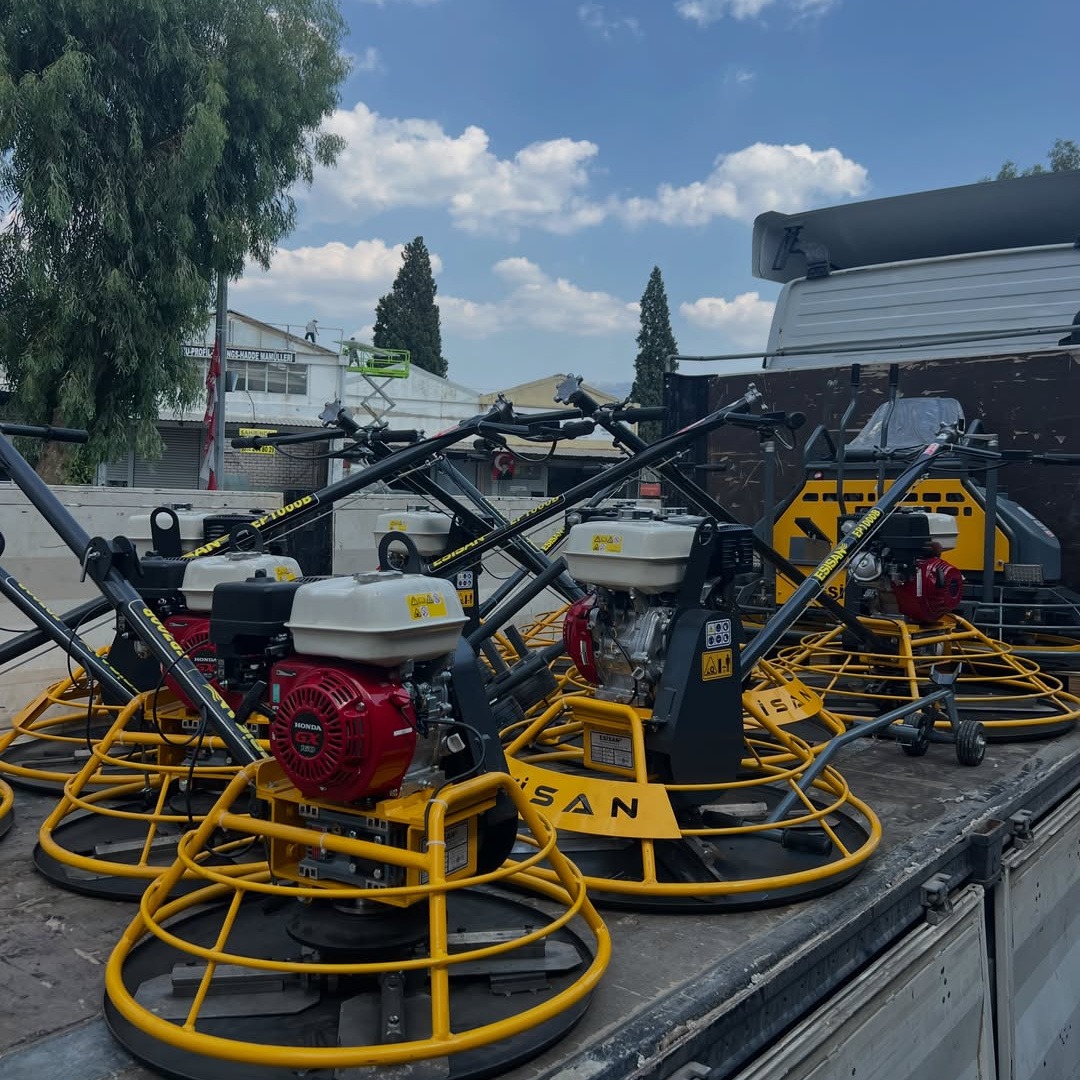
Impact of Power Trowel Maintenance on Surface Quality
Power trowel maintenance is one of the most important site processes directly affecting the flatness, sheen, density, and overall finish quality of a concrete surface. Because a concrete power trowel compacts and refines fresh concrete, even a minor adjustment problem can leave marks, waves, scratches, burnishing, or rough areas on the floor. Maintenance is therefore carried out not only to prevent equipment failure, but also to preserve the required surface standard, help the operator work with greater control, and prevent the effort invested in the concrete placement process from being lost.
The quality of a concrete finish depends on the balanced operation of the parts that contact the surface. Floats, blades, discs, connecting arms, engine speed, belt tension, and machine balance must work in harmony. When they do not, unwanted differences can appear across the floor. A poorly maintained power trowel is harder for the operator to control and may require additional passes over the same area. This increases labor time and makes it more difficult to finish the concrete within the correct working window, placing surface quality at risk.
The impact of power trowel maintenance is most visible on large concrete applications. Factory floors, warehouses, parking areas, concrete yards, workshop floors, and industrial slabs are expected to have consistent quality throughout. If vibration, wobbling, or blade imbalance is repeated across a large area, small defects can develop into major surface problems. These irregularities become particularly noticeable in areas exposed to forklifts, pallet trucks, racking systems, or heavy pedestrian traffic.
Whether the equipment is a plaster finishing machine or a concrete power trowel, every component that contacts the surface determines the final application marks. A worn float may not compact the surface sufficiently, a bent blade can leave lines in the concrete, and a dirty or damaged disc may rotate unevenly. When these parts are inspected on time, the surface can be finished more consistently. If they are not checked, the operator may unintentionally spread the same defect over a large area, creating additional repair work.
The effect of maintenance on surface quality is not limited to mechanical parts; engine performance also determines the application standard. Irregular engine speed, belt slippage, or loose fasteners can prevent the machine from maintaining a steady working rhythm. Rhythm is critical during power troweling: if the machine works too aggressively, it can leave marks; if it works too weakly, it may not compact the surface sufficiently. Regular maintenance helps the machine respond appropriately to the setting condition of the concrete.
A regularly maintained power trowel also provides a safer and more comfortable working environment for the operator. When the machine does not generate unbalanced vibration, blade angles can be adjusted correctly, and engine output remains stable, the operator can read the surface more easily. This is a major advantage during the limited period in which the concrete remains workable. Instead of struggling with the machine, the operator can focus on surface consistency, pass direction, and finishing timing.
Maintenance Preserves the Surface Standard
During power trowel maintenance, floats, blades, discs, the engine, belts, and connection components should be inspected together. Regular checks support more uniform concrete finishing, reduce operator error, and lower the risk of marks, waves, or inconsistent sheen.
The impact of power trowel maintenance on surface quality is also important in terms of after-sales confidence and technical expertise. For businesses using power trowels, plaster finishing machines, or concrete power trowels, disciplined maintenance extends equipment life, reduces labor costs, and strengthens handover quality. Finishing work performed with a regularly inspected machine progresses more consistently, produces more reliable concrete surfaces, and helps the application crew maintain a stable quality standard from one project to the next.
Float, Blade, and Disc Inspections
Float, blade, and disc inspections form the most critical part of power trowel maintenance because these components contact the concrete directly. During operation, they rotate over fresh concrete, compact the surface, refine it, and produce different effects depending on the finishing stage. Any wear, bending, cracking, loose connection, or contamination is therefore reflected directly in surface quality. Even if the engine is powerful, the belt is sound, and the machine body is in good condition, achieving a consistent finish becomes difficult when the float, blade, or disc is not serviceable.
When inspecting the float, the surface-contact area should first be checked for wear, bending, cracks, hardened concrete, or uneven contact patterns. If dried concrete remains on the float, the machine will not glide evenly and may leave unwanted lines on the surface. Float cleanliness is particularly important in plaster finishing machines and other precision applications. A clean, flat, and balanced float allows the operator to work the surface with greater control.
The main point in blade inspection is to confirm that all blades are at the same level and have a similar degree of wear. If one blade is more worn than the others or has a different angle setting, the power trowel cannot apply equal pressure to the surface. This may cause circular marks, localized waviness, or rough transitions. Blade connection points, pitch-adjustment mechanisms, and fasteners should be inspected regularly.
Disc inspection is particularly important during the initial finishing stages. The disc provides a larger contact area on fresh concrete and supports the first compaction and leveling passes. If the disc is bent, cracked, damaged along the edge, or covered with hardened concrete, the machine will not act evenly on the surface during rotation. Connection points should be checked to ensure that the disc seats correctly, the machine runs without wobbling, and movement over the concrete remains controlled.
Cleaning floats, blades, and discs is a simple but effective part of the maintenance process. Mortar and concrete left on the machine after use become difficult to remove once hardened and may reduce surface quality during the next operation. These parts should therefore be cleaned properly after use, hardened residue should be removed without damaging the machine, and the components should be stored in a dry and secure area. Good cleaning practices extend component life and provide more reliable performance at the start of every job.
Replacement timing should also be monitored correctly. Waiting until a blade or float becomes completely unusable can create greater costs on site. Working with worn parts requires the operator to make additional passes, causes unnecessary processing of the concrete, and extends application time. Keeping spare blades, discs, and connection components available on site reduces unexpected downtime, especially during large concrete pours and intensive work schedules.
Surface-Contact Components Should Be Inspected First
Floats, blades, and discs are the parts of a power trowel that directly contact the concrete. Keeping these components clean, balanced, undamaged, and correctly adjusted reduces surface marks, improves finishing quality, and allows the operator to control the machine more easily.
Regular float, blade, and disc inspections help the power trowel operate more consistently and make it easier to achieve the expected concrete surface quality. For crews using power trowels, plaster finishing machines, or concrete power trowels, these inspections are more than a maintenance routine; they are a field discipline that protects handover quality. When components are inspected before use, cleaned afterward, and replaced on time, equipment life is extended and labor and surface-repair costs remain more controlled.
Inspection of the Engine, Belt, and Fasteners
Inspecting the engine, belt, and fasteners is an important part of power trowel maintenance for both surface quality and equipment safety. A concrete power trowel operates over fresh concrete at a specific rhythm, and maintaining this rhythm depends on balanced transmission of engine power. If the engine runs irregularly, the belt slips, or fasteners become loose, the machine cannot deliver stable performance on the surface. This makes the machine harder to control and can create unwanted transition marks in the concrete.
Engine inspection should begin with observing starting performance, idle speed, throttle response, and operating sound. On gasoline-powered trowels, fuel level, oil condition, air filter, spark plug, fuel hose, and leaks around the engine should be checked. Difficult starting, irregular speed, or unusual noise may indicate a developing fault. Because concrete does not wait during the setting process, an engine-related stoppage affects not only the machine but also the crew's ability to finish the surface at the correct time.
Belt inspection is necessary to transfer engine power to the finishing mechanism correctly. Cracks, wear, looseness, slipping, signs of failure, or incorrect tension can prevent the machine from producing sufficient rotational force. If the belt is too loose, power transmission weakens and the blades do not rotate at the required performance level. If it is too tight, it may place unnecessary load on bearings, pulleys, and engine connections. Belt tension should therefore be checked according to the manufacturer's recommendations, and worn belts should be replaced before they cause a problem on site.
Fasteners maintain the mechanical integrity required for safe and balanced operation. Blade arms, disc connections, engine mounting points, the safety cage, handle assembly, pitch-adjustment mechanism, bolts, nuts, and pins should all be inspected regularly. Because the machine is exposed to continuous vibration, fasteners can loosen over time. If this is not identified early, vibration increases, directional control becomes more difficult, and the risk of component damage rises.
Engine and belt inspections become even more important during long-duration and large-area applications. On factory floors, warehouses, parking areas, and industrial slabs, a power trowel may operate for hours. Engine temperature, belt load, and vibration on fasteners all increase during intensive use. In addition to the pre-operation inspection, brief checks at regular intervals are useful during long applications. If unusual noise, odor, vibration, or performance loss is detected, the operation should be stopped safely and the machine should be inspected.
Electric power trowels require different engine-related checks. Cable condition, plug connection, extension leads, power supply, motor housing, switch system, and electrical safety should be evaluated carefully. Cable damage or weak power supply can reduce motor performance and create a safety risk. In sensitive applications such as plaster finishing, secure electrical connections support stable machine speed and more controlled surface results.
Power Transmission Must Remain Balanced
Stable engine operation, correct belt tension, and secure fasteners allow the power trowel to move evenly over the surface. When power transmission is healthy, the operator can control the machine more easily and surface quality becomes more consistent.
Inspection of the engine, belt, and fasteners is a fundamental reliability step that should not be neglected in power trowel maintenance. For crews using power trowels, plaster finishing machines, or concrete power trowels, these checks reduce unexpected stoppages, lower the risk of marks and waves, and make spare-parts costs more manageable. With disciplined maintenance, the machine remains ready during the concrete's correct finishing window and the site crew can manage surface quality more effectively.
Maintenance Differences Between Gasoline and Electric Power Trowels
The maintenance differences between gasoline and electric power trowels should be evaluated according to the power source, operating environment, duration of use, and safety requirements. Both machine types are used to process, compact, and smooth concrete surfaces, but their maintenance procedures are not identical. Gasoline power trowels require greater attention to the engine, fuel, oil, air filter, and exhaust system. Electric power trowels require more careful inspection of cables, plugs, power supply, motor insulation, and electrical safety.
Gasoline power trowels are often preferred for open areas, large concrete floors, construction sites, factory floors, and applications with limited electrical infrastructure. The main maintenance focus is consistent engine operation. Fuel quality, oil level, air-filter cleanliness, spark-plug condition, fuel hoses, throttle cable, engine mountings, and the exhaust area should be inspected at regular intervals. Irregular engine operation can prevent the concrete power trowel from maintaining a steady working rhythm and may create uneven transition marks on the surface.
Air-filter inspection is especially important on gasoline models because of construction site conditions. Dust, cement residue, ground particles, and outdoor exposure can restrict the engine's air intake. A dirty air filter can reduce airflow, increase fuel consumption, and lower machine performance. This may require the operator to make additional adjustments during finishing. Regular filter cleaning or replacement supports more stable engine operation and more consistent machine response on the surface.
For electric power trowels, electrical safety is the most critical maintenance issue. Cuts, crushing, loose connections, burn marks, or weakened insulation on the cable should be addressed before the machine is operated. On construction sites, cables may share the same area with water, concrete slurry, construction machinery, and pedestrian traffic. Cable routing, panel connection, extension leads, plug condition, and residual-current protection should therefore be checked regularly. An electric power trowel operating without safe power infrastructure creates risks for both performance and occupational safety.
Electric models have the maintenance advantage of requiring fewer fuel-, oil-, and exhaust-related procedures than gasoline engines. This can provide easier operation in enclosed spaces, sensitive applications, or sites with a reliable power supply. However, reduced mechanical maintenance does not mean that maintenance is unnecessary. The motor housing, cooling fan, electrical connections, on/off switch, cable entry points, and protective body components should still be inspected regularly. Stable power supply is particularly valuable in precision applications such as plaster finishing.
Gasoline and electric power trowels also share common maintenance points. Floats, blades, discs, the safety cage, fastening bolts, pitch-adjustment systems, handles, and the machine frame should be checked on both types. Worn surface-contact components reduce finishing quality regardless of the power source. Loose fasteners also increase vibration and make the machine more difficult to control. These common mechanical checks should not be overlooked when evaluating the differences between the two machine types.
Maintenance Should Be Planned According to the Power Source
Fuel, oil, air filters, spark plugs, and engine condition are priorities on gasoline power trowels. Cables, plugs, power lines, and electrical safety take priority on electric models. Blades, discs, floats, and fasteners should be inspected regularly on both types.
Understanding the maintenance differences between gasoline and electric power trowels supports more reliable field operation. When selecting among power trowels, plaster finishing machines, and concrete power trowels, the maintenance responsibility should be considered together with the intended application. Engine and fuel-system discipline is decisive for gasoline models working intensively outdoors, while safe connections and cable inspection are essential for electric models used where electrical infrastructure is available.
Daily Pre-Operation Inspection Checklist
A daily pre-operation checklist includes the essential maintenance steps required for a power trowel to operate safely, evenly, and efficiently on a concrete surface. Because the concrete power trowel is used during one of the most sensitive stages of the application, even a minor machine issue can disrupt the workflow. The concrete's workable finishing window is limited, so a fault identified during operation can place surface quality at risk. The checklist should therefore be completed quickly but carefully before the machine is started.
The first step is to inspect the machine's general physical condition. The frame should be checked for cracks, impact damage, loose parts, missing connections, a bent safety cage, or damage to the handle. A power trowel can be damaged while being transported, stored, or unloaded from a vehicle. These issues may appear minor at first but can create vibration, wobbling, or a safety risk during operation. Before starting the machine, the operator should confirm that all major components are present and secure.
Float, blade, and disc inspection is one of the most important parts of the daily checklist. All components that contact the surface should be clean, flat, undamaged, and securely connected. The operation should not begin if the blades show bending, wear, cracks, loose connections, or hardened concrete. If a disc will be used, it should be confirmed that it seats correctly and will not create imbalance while rotating. The condition of these parts directly determines whether marks, lines, waves, or roughness will appear on the concrete.
The engine and power-transmission system should also be checked before operation. For gasoline power trowels, inspect the fuel level, oil level, air filter, spark plug, throttle cable, and any leaks around the engine. For electric power trowels, inspect the cable, plug, extension lead, panel connection, and power supply. Belt tension, pulley condition, and fastener security should be reviewed on both types. If power transmission is not balanced, the machine cannot maintain the required working rhythm.
Connection bolts, nuts, pins, the pitch-adjustment mechanism, and handle fastenings must be included in the checklist. A power trowel produces continuous vibration during operation, which can gradually loosen fasteners. Loose connections do more than damage the machine; they make operator control more difficult and may create irregular passes on the surface. A quick tightness inspection should therefore be completed before use, and the machine should not be taken onto the slab if any fastener is missing or damaged.
Safety equipment and work-area organization should also be reviewed during the pre-operation inspection. The safety cage should be in place, the operator's movement area should be clear, and no cables, hoses, formwork pieces, or construction debris should create a trip hazard. Gloves, safety footwear, hearing protection, and other required personal protective equipment should be available. Even a mechanically sound concrete power trowel cannot be used safely or efficiently in a poorly organized work area.
The Checklist Prepares the Machine for Operation
Before operation, the frame, floats, blades, discs, engine, belt, fasteners, power line, and safety area should be checked together. This routine supports more balanced and reliable power trowel operation on the concrete surface.
The daily pre-operation checklist turns power trowel maintenance into a consistent site practice. For crews using power trowels, plaster finishing machines, or concrete power trowels, the checklist helps identify problems in advance, preserve surface quality, reduce labor loss, and improve operating safety. A systematic inspection at the beginning of each shift ensures that the machine is not merely operational, but fully prepared to finish the concrete at the correct time and to the required surface standard.
Impact of Maintenance Neglect on Labor and Surface Costs
The effect of maintenance neglect on labor and surface costs is one of the most common hidden cost areas for crews using power trowels. Even if the concrete power trowel appears to be operating, worn blades, a dirty disc, loose connections, irregular engine speed, or belt problems can reduce surface quality. When these issues are discovered during application, the operator must make additional passes, the crew loses time, and the available finishing window becomes shorter. Poor maintenance therefore appears on site not only as a technical problem, but also as direct labor inefficiency.
Timing is critical during power troweling. The concrete remains suitable for finishing only for a limited period, and the machine must operate consistently within this window. If a poorly maintained power trowel stops, loses power, or leaves blade marks during application, the crew must spend valuable time intervening. Because the concrete continues to set during this delay, reworking the surface becomes more difficult. In this situation, not only the machine but the quality of the entire pour is placed at risk.
Surface cost should not be measured only through concrete and machine expenses. If a poorly finished floor contains waves, scratches, burnishing, roughness, uneven sheen, or localized elevation differences, additional correction work may be required. This may include grinding, repair mortar, coating preparation, or renewed labor. Neglecting concrete power trowel maintenance may begin as a small inspection omission, but it can develop into a larger chain of costs affecting final handover quality.
From a labor-cost perspective, poor maintenance disrupts the crew's productive working rhythm. When the operator struggles to control the machine, support personnel must intervene more often, repeated passes are made over the same area, and the schedule extends. This time loss becomes more significant on large factory floors, warehouses, parking areas, and industrial slabs. Skipping a maintenance check that takes only a few minutes can result in hours of repair and waiting on site.
Parts costs are also directly affected by maintenance neglect. If blades, discs, belts, fasteners, or engine components are not inspected on time, minor wear can develop into larger failures. A loose fastener, for example, may require only tightening at first, but if neglected it can damage the blade arm, disc connection, or frame. Similarly, an unchecked belt can strain the power-transmission system. These problems increase spare-parts costs and may require the machine to be removed from the site.
The commercial impact of maintenance neglect is also visible in customer perception and handover quality. When the concrete surface shows visible marks, uneven sheen, or waviness, the client evaluates not only the defect but also the professionalism of the application crew. A regularly maintained plaster finishing machine or concrete power trowel delivers more controlled results and reinforces confidence in after-sales support and technical competence. Poorly maintained equipment can weaken quality perception even when the crew itself is experienced.
Poor Maintenance Increases Hidden Costs
Neglecting power trowel maintenance can create additional labor, surface repair, parts replacement, lost time, and handover-quality problems. Regular maintenance keeps the machine ready, improves operator productivity, and helps control the total cost of the finished surface.
The impact of maintenance neglect on labor and surface costs is both a technical and commercial issue. For crews using power trowels, plaster finishing machines, or concrete power trowels, regular maintenance means fewer breakdowns, less repair work, more efficient labor, and more reliable surface handover. When daily inspection, component cleaning, timely replacement, and service follow-up are performed consistently, the equipment lasts longer and concrete surface quality remains more predictable.
Power Trowel Service and Spare Parts Process
The power trowel service and spare-parts process is an after-sales support function that enables the equipment to be used safely, efficiently, and over a long service life. Concrete power trowels require regular maintenance and timely component replacement because of continuous vibration, concrete residue, engine load, blade wear, and transport conditions. When this process is managed correctly, the machine is no longer treated as equipment that receives attention only after a breakdown; through planned service, it becomes a production asset that is ready, balanced, and reliable before every application.
The first step in the service process is to determine maintenance intervals according to usage intensity. A power trowel used daily does not have the same service requirement as one used periodically. On machines operating in large industrial floors, parking areas, factory sites, or intensive concrete placement schedules, blades, discs, belts, engine oil, air filters, fasteners, and pitch-adjustment mechanisms should be inspected more frequently. As usage increases, the service plan must be managed with greater discipline.
The components most frequently monitored in the spare-parts process include floats, blades, discs, belts, fasteners, pitch-adjustment parts, the safety cage, handle components, and engine consumables. On gasoline models, air filters, spark plugs, fuel hoses, oil, and engine service parts are priorities. On electric models, cables, plugs, switch systems, and motor connections require closer monitoring. Whether a plaster finishing machine or a concrete power trowel is used, timely replacement of surface-contact components directly affects finish quality.
Compatibility is as important as price when sourcing spare parts. A blade, disc, belt, or connection component that is not suitable for the machine may appear to work in the short term, but over time it can create unbalanced rotation, vibration, surface marks, and accelerated wear. The machine model, dimensions, connection type, operating configuration, and intended use should therefore be provided accurately when ordering replacement parts. On surface-sensitive equipment such as concrete power trowels, incompatible components can damage not only the machine but also the completed concrete floor.
Response time should also be considered when evaluating service support. Because concrete placement and finishing are time-dependent, a machine failure can affect the work program immediately. Access to the service point, spare-parts availability, technical support communication, and fault-diagnosis time all provide important operational advantages. When purchasing the machine, the service network and parts availability should be evaluated together with the product price. This approach supports more accurate long-term cost management.
Maintaining service records makes the spare-parts and maintenance process more controlled. Recording when a part was replaced, which faults occurred, when the engine was serviced, and how quickly blades or discs wore makes future maintenance requirements easier to predict. These records are particularly valuable for crews operating several power trowels. When the machine history is known, unnecessary part replacement is reduced, critical components can be sourced on time, and site preparation becomes more organized.
The Service Process Improves Machine Reliability
A power trowel service and spare-parts plan should be managed by evaluating usage intensity, component wear, engine type, maintenance intervals, parts compatibility, and technical-support response time together. This plan keeps the machine ready for every concrete application.
The power trowel service and spare-parts process is an important part of after-sales confidence and the perception of technical expertise. For businesses using power trowels, plaster finishing machines, or concrete power trowels, correct service support means fewer breakdowns, faster intervention, more consistent surface quality, and more controlled operating costs. When compatible parts, planned maintenance, regular inspection, and reliable technical support come together, the machine remains productive for longer and application crews can manage concrete surface quality more consistently.