 Türkçe
 English
 Русский
 العربية
Why Are Plate Compactors Preferred in Confined Areas?
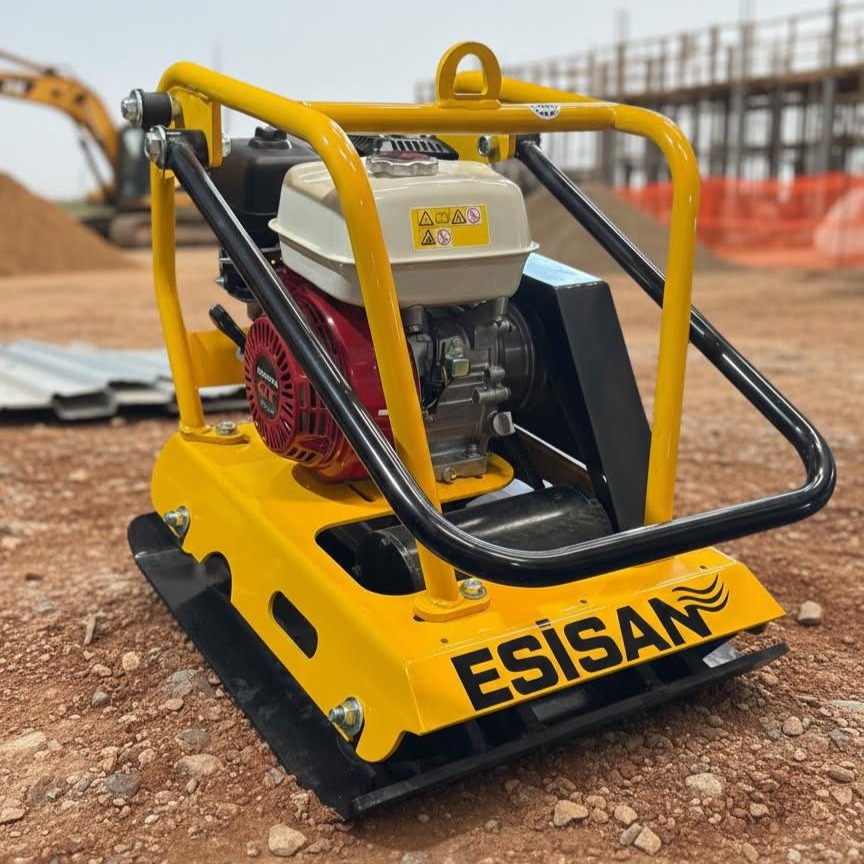
A plate compactor is one of the most practical pieces of site equipment for carrying out soil compaction work in confined areas with greater control and efficiency. It provides an effective solution for pavement edges, kerb surroundings, trench backfills, building perimeters, garden paths, utility crossings, and small repair zones where large rollers cannot operate. The main reason it is preferred as a soil compaction machine is its compact body, which allows it to move in restricted spaces, and its vibrating base plate, which applies regular pressure to the ground.
Compaction in confined areas does not simply mean pressing the ground down. It also means settling the fill, preventing voids, reducing future settlement risk, and creating a more stable base before surfacing. If a soil compaction machine is used incorrectly, level differences may appear in paving stones, voids may develop at kerb edges, trench backfill may settle, or surface finishes may become uneven. In this respect, a plate compactor is an important application tool that improves the long-term durability of small-scale groundworks.
One of the main advantages of a plate compactor in confined areas is maneuverability. While large compaction machines require wide turning space, a plate compactor can move forward and backward in smaller working zones. This is particularly important around buildings, walls, manholes, kerb lines, and utility trenches. When the operator guides the machine at the correct angle, the compaction equipment densifies the fill more carefully and reduces the risk of damaging surrounding works.
In pavement and landscaping applications, a plate compactor helps the surface finish settle more securely. The sub-base under interlocking paving stones, kerbs, garden paths, pedestrian pavements, or small parking access areas must reach sufficient density. If the fill remains loose, the finished surface may experience movement, level differences, or localized settlement. A soil compaction machine suitable for confined spaces reduces these risks by creating a more stable base before surfacing.
In utility and trench backfilling work, a plate compactor allows the fill to be compacted in stages after excavation. Trenches for water, electricity, natural gas, fiber-optic cables, or drainage lines may have limited width. Using a large machine in these areas is both difficult and risky. When operated with an appropriate layer thickness, a plate compactor helps the backfill settle more uniformly. This reduces voids around pipelines, settlement in the upper surface, and loosening of the fill over time.
Operator control is another important advantage when using a plate compactor in restricted spaces. Because the machine is compact, the operator can monitor the compaction direction, pass sequence, and surface response more closely. If the soil is too wet, dry, loose, or mixed, the machine's reaction can be observed quickly. This allows on-site decisions such as increasing the number of passes, reducing layer thickness, or reworking the surface to be made more efficiently.
Provides a Control Advantage in Confined Areas
Thanks to its compact plate, vibration effect, and maneuverability, a plate compactor provides efficient soil compaction in restricted work zones such as pavements, trench backfills, kerb surroundings, and building perimeters. Correct equipment selection and a proper pass pattern are essential for maintaining ground density in confined areas.
The reason plate compactors are preferred in confined areas is their practical field use and controlled compaction capability. For crews evaluating a soil compaction machine, ground compactor, or compaction attachment, the correct solution is not simply to choose a small machine. Soil type, fill thickness, pass direction, nearby structures, and operator working space should all be planned together. This approach produces a stronger, more orderly, and longer-lasting base for small-scale groundworks.
Pavement, Trench Backfill, and Kerb-Surrounding Applications
Pavement, trench backfill, and kerb-surrounding applications are among the site operations where the confined-area performance of a plate compactor is most valuable. In these areas, compaction is not carried out only to press the ground down. It is required to help paving units settle evenly, keep the kerb line stable, prevent trench backfill from settling over time, and preserve surface levels. Because large compaction machines often cannot access these locations easily, a plate compactor provides a more practical and controlled solution.
In pavement work, a plate compactor helps layers such as the sub-base and sand bed settle more evenly. Pedestrian traffic, bicycle use, accessibility ramps, tree surrounds, manhole covers, and building entrances can create different loads across pavement areas. If the underlying fill is not compacted sufficiently, interlocking paving stones may move, level differences may develop, and low points that collect rainwater may form. The compaction equipment should therefore be used carefully before paving to create a stable base.
Plate compactor use in trench backfilling should follow a structured plan. When trenches for water, natural gas, electricity, drainage, or fiber-optic lines are closed, the fill should be placed gradually and each layer compacted separately. If the fill is placed in one thick layer, the upper surface may appear compacted while voids remain underneath. These voids settle over time and can cause subsidence in roads, pavements, or finished surfaces. In this application, the soil compaction machine should be treated as a tool that preserves the layer structure rather than simply compacting the top surface.
Compaction around kerbs requires greater care. If kerb units have only recently been installed, or their concrete backing has not yet reached full strength, uncontrolled use of the plate compactor can cause movement, displacement, or level changes. The machine weight, vibration force, pass direction, and working distance from the kerb should therefore be established in advance. The objective is to compact the surrounding fill without disturbing alignment or elevation.
Material selection directly affects compaction quality in narrow trenches and around kerb edges. Fill containing oversized particles, insufficient moisture, excessive moisture, or inconsistent material can make it difficult to achieve the required density with a plate compactor. When fill with suitable grading is placed at the correct moisture level, vibration is transferred to the soil more efficiently. For this reason, it is not enough to focus only on the machine; the structure and placement thickness of the fill material are also part of successful compaction.
The pass pattern is also important in pavements and trench backfills. If the operator moves the plate compactor in random directions, some areas may be over-compacted while others remain loose. For a more balanced result, passes should follow a planned sequence, each new pass should overlap the previous line, and edge zones should be checked separately. Where continuous turning is required, the operator should move without disturbing the surface or damaging kerb and trench edges.
Layer Control Is Essential in Restricted Applications
When using a plate compactor around pavements, trench backfills, and kerbs, fill should be placed in controlled layers, passes should be orderly, material moisture should be monitored, and the compaction plan should avoid damage to surrounding works.
Using a plate compactor in pavement, trench backfill, and kerb-surrounding applications is an important method for preserving site quality in restricted areas. As a soil compaction machine, ground compactor, or compaction attachment, it delivers the best results when correct layer thickness, suitable material, controlled pass patterns, and careful operation are combined. This planning helps pavements settle evenly, improves resistance to future settlement in trench backfills, and creates more stable ground support around kerbs.
Relationship Between Machine Weight and Maneuverability
Machine weight and maneuverability are two key criteria that must be evaluated together when selecting a plate compactor. Efficient compaction in confined areas requires sufficient vibration and downward force, but this performance should not be so high that the operator loses control of the machine. Around pavement edges, trench backfills, kerbs, building perimeters, and manholes, an excessively heavy or difficult-to-steer soil compaction machine can make the work more tiring, slower, and riskier rather than improving productivity.
Machine weight is one of the factors that determines compaction performance. Heavier plate compactors can apply greater force and may provide stronger compaction in certain types of fill. In restricted areas, however, weight alone is not an advantage. As machine weight increases, turning, reversing, edge alignment, and short-distance maneuvering become more difficult. If the operator struggles to control the machine, passes may become irregular, damage risk may increase around kerbs and walls, and compaction may not remain uniform across the area.
Maneuverability directly affects production speed, particularly in narrow and fragmented work areas. In a large open area, the machine can move along long, uninterrupted lines. Around trench edges, pavement corners, building entrances, or behind kerbs, however, frequent directional changes may be required. In these locations, handle design, plate size, vibration balance, and the operator's sense of control become important. A compaction machine with good maneuverability processes the ground evenly, even over short runs, and helps the operator work with less effort.
The relationship between machine weight and soil type should also be established correctly. Vibration may achieve faster results in sand or granular fill, while pass count and layer thickness become more important in wetter, mixed, or fine-grained soils. A machine that is too light may not produce sufficient density, while an excessively heavy machine may disturb the surface or place unnecessary pressure on edge structures in confined areas. The selection should therefore consider not only the machine's weight, but also the ground's response to compaction.
Plate dimensions are as important as weight when operating in confined areas. A large base plate can increase productivity on open surfaces but may prevent full ground contact in narrow trenches, pavement edges, or around kerbs. A smaller plate improves access and control, although it may require additional passes in larger areas. The correct balance depends on the application. The machine should apply sufficient force while still allowing the operator to change direction comfortably within the working space.
Operator fatigue is often overlooked when evaluating machine weight and maneuverability. In a confined area, the operator repeatedly aligns, reverses, guides toward kerbs, removes the machine from trenches, and changes direction. If the machine is too heavy or poorly balanced, fatigue develops quickly. As fatigue increases, pass patterns become less consistent, some zones may receive insufficient compaction, and the risk of striking surrounding structures rises. Site ergonomics are therefore just as important as compaction performance when selecting equipment.
Weight and Control Must Be Balanced
A plate compactor should be heavy enough to achieve the required ground density, while still offering enough maneuverability for safe and orderly passes in confined areas. The correct balance improves both compaction quality and operator productivity.
When machine weight and maneuverability are evaluated correctly, a plate compactor can be used more efficiently in restricted areas. For crews choosing a soil compaction machine, ground compactor, or compaction attachment, the key issue is not whether the machine appears powerful, but whether it remains controllable under actual site conditions. Around pavements, trench backfills, kerbs, and building edges, a machine with suitable weight, easy steering, and balanced vibration provides more reliable compaction quality.
Operator Walking Speed and Pass Pattern
To achieve efficient soil compaction with a plate compactor in confined areas, operator walking speed and the pass pattern must be planned correctly. Even if the machine has suitable weight, sufficient vibration force, and the correct fill material, compaction energy will not be transferred effectively if the operator moves too quickly. Moving too slowly may overwork certain areas, create surface irregularities, or extend the schedule. Using a soil compaction machine therefore involves more than simply starting the equipment and moving forward; it requires a controlled rhythm based on the ground's response.
Walking speed must be managed more carefully in confined areas than in open sites. Around pavement edges, trench backfills, kerbs, and building perimeters, the operator must frequently change direction, align the machine over short distances, and work close to surrounding structures. Moving too quickly can reduce compaction quality and increase the risk of damaging manhole covers, walls, kerbs, or pavement edges. When the plate compactor advances at a controlled and consistent pace, the surface compacts more evenly.
The pass pattern determines the sequence and number of repetitions used across the same area. Random passes can over-compact some zones while leaving others loose. This risk is greater in confined areas because turns, edge approaches, and short runs can disturb the compaction sequence. For a more balanced result, the operator should select a clear starting point, plan passes parallel to each other or according to the geometry of the site, and overlap each new pass with part of the previous line.
In trench backfilling, the pass pattern should be considered together with layer thickness. If the fill is placed too thickly, the plate compactor may densify the surface while failing to compact the lower portion sufficiently. The operator should therefore compact each layer separately and work in stages. A soil compaction machine produces a more uniform effect when used with the correct layer structure. Otherwise, the surface may initially look level while settlement and subsidence develop later along the trench.
Around kerbs and pavements, pass direction should be selected more carefully. Moving parallel to the kerb can provide more regular compaction along the line, but excessive pressure may move newly installed units. At corners and turning points, the plate compactor should be guided with short and controlled movements rather than abrupt rotation. The machine should support the surrounding works without disturbing their existing alignment.
Soil moisture and material structure should also be considered when determining operator speed. Very dry material may not compact effectively, while excessively wet material can move under the machine or be pushed toward the edges. Granular fill may respond quickly, while mixed or fine-grained material may require slower and more careful passes. The operator should monitor the machine's reaction to the soil and adjust speed, pass count, and direction accordingly.
The Pass Pattern Determines Compaction Quality
When using a plate compactor, walking speed should remain consistent, passes should be planned, and each line should overlap the previous pass in a controlled manner. In confined areas, an orderly pass pattern preserves ground density and reduces the risk of localized settlement.
Operator walking speed and pass pattern are the practical disciplines that convert plate compactor performance into actual field productivity. Even when the correct soil compaction machine, ground compactor, or compaction attachment has been selected, the required density cannot be achieved through fast, irregular, or incomplete passes. Around pavements, trench backfills, kerbs, and similar confined areas, consistent speed, planned repetitions, correct overlap, and attention to the ground's response create a stronger and longer-lasting base.
How Is Ground Density Maintained in Confined Areas?
Maintaining ground density in confined areas is one of the most critical objectives when using a plate compactor. In open areas, the machine can move along long and regular paths, while work around pavement edges, trench backfills, kerbs, building perimeters, manholes, and narrow passages is more fragmented. This fragmented working pattern can cause some zones to become over-compacted while others remain loose. Fill thickness, pass sequence, material moisture, and operator control must therefore be managed together.
The first step in maintaining density is to avoid placing excessively thick fill layers. If trench backfill or pavement sub-base material is placed in one thick layer, the plate compactor may densify the upper surface without achieving sufficient density below. This may not be visible immediately, but can later appear as settlement, subsidence, movement in paving units, or voids beneath the finished surface. Soil compaction equipment produces the best results when fill is placed gradually and each layer is compacted separately.
Material moisture is another important factor in maintaining density. Fill that is too dry may not bind sufficiently under vibration, limiting the compaction effect to the surface. Material that is too wet may move under the machine, be pushed toward the edges, or behave as though it is being kneaded rather than compacted. The moisture level should therefore be suitable before the plate compactor is used. Correct moisture allows vibration energy to be transferred more effectively into the ground.
Regular overlapping passes are required to maintain density in confined areas. If each pass covers part of the previous line, compaction energy is distributed more uniformly. In areas compacted randomly, some zones may be worked repeatedly while corners and edges remain insufficiently compacted. This can later create level problems around kerbs, manholes, and trench edges. The compaction machine should therefore be used according to a clear direction and pass sequence.
Edge zones require special attention. If the base plate does not sit fully on the ground, vibration cannot be transferred effectively. Around kerbs, walls, or narrow trench sections, part of the plate may remain unsupported, reducing compaction quality. In these cases, the machine position should be adjusted carefully, the area may need to be prepared first with hand tools, and controlled passes should then be applied. The objective is to achieve compaction at the edges that is as balanced as in the central area.
The surface should also be inspected after compaction. The operator should not simply complete the passes and leave the area; settlement, loose material, waviness, overly wet patches, and edge voids should be checked. In confined areas, a small loose point can become more visible after surfacing. Additional material should be placed where necessary, deficient zones should be reworked, and controlled repeat passes should be made with the plate compactor.
Density Is Preserved Through Layer and Pass Discipline
Ground density in confined areas is maintained through correct fill thickness, suitable moisture, regular overlapping passes, edge inspection, and post-compaction surface checks. The organization of the field application is as important as machine power.
When ground density is maintained, pavements, trench backfills, kerb surroundings, and small utility applications become more durable. When used correctly as a soil compaction machine, ground compactor, or compaction attachment, a plate compactor does more than press the surface. It helps the fill settle evenly, reduces voids beneath the finished surface, and lowers the risk of localized settlement during use. This quality depends on layer management, operator attention, and regular site checks as much as machine selection.
Safe Operation and Surrounding Equipment Control
When operating a plate compactor in confined areas, safe use and control of surrounding equipment are as important as compaction quality. Pavement edges, trench backfills, kerbs, building perimeters, and utility crossings generally provide limited working space, bringing the machine, operator, support crew, pedestrians, vehicles, and existing structures into close proximity. Before the soil compaction machine is started, both its technical condition and the surrounding site arrangement should therefore be checked.
The first step in safe operation is to clear and organize the working area. Stones, metal pieces, hoses, cables, hand tools, formwork debris, or loose fill left on the ground can affect the operator's balance. Because the plate compactor operates through vibration, the operator must maintain continuous control. Trip or slip hazards can alter the machine's direction and increase the risk of striking kerbs, manholes, walls, or finished surfaces.
Daily machine inspection is a fundamental part of safe operation. The engine, fuel level, oil condition, vibrating plate, fasteners, handle, protective components, and starting system should be checked before use. Loose connections or a damaged handle make the machine more difficult to guide. Cracks, bending, or adhered material on the base plate can reduce compaction performance. A short but consistent inspection routine should therefore be completed before the machine is taken onto the site.
Nearby equipment and infrastructure should also be reviewed before compaction begins. Pipelines, cables, manholes, covers, drainage lines, and other utility components in trench backfills may be affected by vibration. Newly installed kerbs, fresh pavement elements, and sensitive surfaces around buildings require the operator to adjust the working distance. The compaction machine should densify the ground without damaging surrounding work.
Pedestrian and vehicle safety must be planned separately in confined work areas. Where work is carried out beside a pavement or roadway, warning signs, barriers, tape, or temporary direction controls should be used. People passing behind the operator may not recognize the direction of machine movement or vibration. Likewise, small construction machines, wheelbarrows, and trucks can create a hazardous overlap with the working line of the plate compactor. The work zone should therefore be separated as far as practical and unauthorized access restricted.
Personal protective equipment should not be neglected when operating a plate compactor. The operator should wear appropriate safety footwear, gloves, hearing protection, and eye protection where required. Long-term use of vibrating equipment can cause fatigue, so operator posture and break planning are also important. As fatigue increases in restricted areas, directional errors, irregular passes, and the risk of striking nearby equipment also increase.
A Safe Site Supports Efficient Compaction
Before using a plate compactor, machine condition, operator access, nearby equipment, utility components, pedestrian routes, and personal protective equipment should be evaluated together. An orderly site improves both safety and compaction quality.
Safe operation and surrounding equipment control are fundamental site disciplines that enable a plate compactor to work efficiently in confined areas. Even if the correct soil compaction machine, ground compactor, or compaction attachment is selected, poor site organization slows the operation, increases operator effort, and creates a risk of damage to existing works. Around pavements, trench backfills, kerbs, and building edges, a controlled work zone, sound machine inspection, and a safe access plan support more reliable and sustainable compaction.
Site Information Required for Plate Compactor Selection
Accurate site information must be provided in order to select the correct plate compactor. A soil compaction machine intended for use in confined areas should not be selected solely according to machine weight or engine power. The width of the application area, soil type, fill thickness, working distance, presence of sensitive edges such as kerbs or walls, operator movement space, and daily workload should all be evaluated together. If this information is incomplete, the selected machine may provide insufficient compaction or become too difficult to control in the available space.
The first information to provide is the type of application. Pavement sub-base preparation, trench backfilling, kerb surroundings, garden paths, building edges, manhole surroundings, small road repairs, and paving-stone installation do not have the same compaction requirements. Trench backfilling prioritizes layer-by-layer compaction and maneuvering within a narrow line, while pavement work focuses more heavily on even settlement and uniform compaction beneath the surface. The intended application should therefore be stated clearly during the quotation or selection process.
Soil type and fill material are among the most important technical details in plate compactor selection. Sand, gravel, stabilized material, crushed stone, fill soil, and mixed material all respond differently to compaction. Vibration may transfer more efficiently through granular material, while fine-grained or excessively wet soils require a more controlled pass plan. Knowing the moisture condition, particle structure, and layer thickness allows machine weight, plate size, and vibration performance to be evaluated more accurately.
The size and access conditions of the work area must also be stated. Will the machine operate inside a narrow trench, between a kerb and a wall, through a building entrance, around a manhole, or in a small but open space? These questions are important for maneuverability and plate dimensions. A compaction attachment with a large base plate may not sit fully on the ground in a narrow passage and may damage surrounding work. A very small machine, however, may require unnecessary additional passes in a wider area.
Fill thickness and the required compaction standard affect the necessary machine capacity. The site team should state the layer thickness, planned number of passes, finished surface type, and expected load. A pedestrian pavement, light vehicle access area, and utility trench cover all require different density levels. If machine selection does not reflect the intended use, the surface may appear satisfactory at first but later experience settlement or subsidence.
Operator experience and crew organization should also be included in the site information. In confined areas, the operator's ability to guide the machine, overlap passes, monitor edges, and interpret the ground's response is important. Less experienced crews may benefit from machines that are easier to control, well balanced, and straightforward to operate. For professional teams working under intensive schedules, durability, operating time, ease of maintenance, and transport convenience may be more important. This information affects not only technical capacity, but also usability.
The Correct Selection Depends on Site Data
For plate compactor selection, the application type, soil material, working width, fill thickness, pass plan, nearby sensitive work, and crew experience should be clarified. These data help identify a machine that can provide both sufficient compaction and safe operation in confined areas.
When accurate site information is provided, soil compaction in confined areas can be planned more effectively. For crews evaluating a soil compaction machine, ground compactor, or compaction attachment, the most efficient choice should be based on actual working conditions rather than product specifications alone. Around pavements, trench backfills, kerbs, and similar restricted areas, suitable weight, the correct plate size, sufficient vibration force, and easy maneuverability produce faster, safer, and more durable results.