 Türkçe
 English
 Русский
 العربية
The Role of Submersible Pumps in Construction Site Drainage
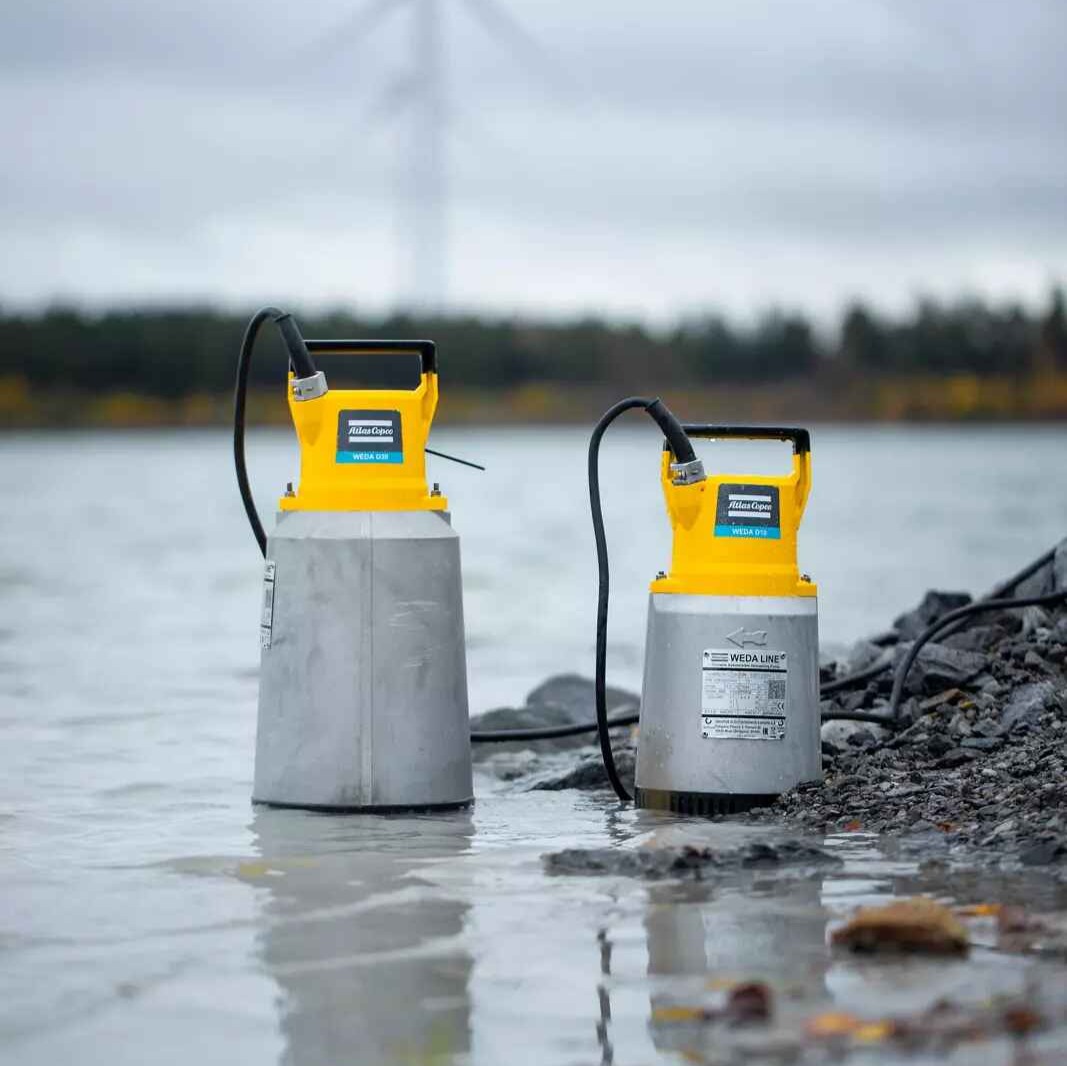
In construction site drainage, a submersible pump is one of the most critical pieces of equipment used to remove accumulated water in a controlled manner. Water build-up in foundation excavations, basement construction areas, infrastructure lines, tunnel entrances, road underpasses, concrete preparation zones, and temporary work pits can directly affect occupational safety, production speed, and ground stability. Professional site equipment such as Atlas Copco submersible pumps is selected not only to remove water, but also to establish an operational drainage system that supports uninterrupted site activity.
The primary function of a submersible pump on a construction site is to be lowered directly into the water and perform suction from the point of accumulation. This configuration provides a major advantage in pits, foundation excavations, and low-elevation areas. While some surface-mounted pump systems may struggle because of suction-line distance, priming, or air-entry issues, a submersible pump operates inside the water and makes the discharge process more practical. This characteristic enables rapid intervention during sudden rainfall, groundwater seepage, or unexpected water accumulation in excavation areas.
Although a construction site pump is often considered support equipment within the production plan, it plays a direct role in preventing operational disruption. If the water level in a foundation excavation cannot be controlled, formwork, reinforcement, lean concrete, waterproofing, and concrete placement may be delayed. If water accumulates in infrastructure trenches, pipe installation, welding, connection, backfilling, and compaction cannot proceed properly. A drainage pump is therefore used not only to discharge water, but also to protect the production sequence and provide crews with a safe working area.
Submersible pumps stand out among commercial pumps in construction environments because of their mobile structure and quick installation. The point at which water accumulates is not always fixed; rainfall direction, excavation elevation, drainage channels, soil permeability, and site slope can change the collection point. A submersible pump adapts easily to this variability. It can be placed in the required pit or collection point, connected to a hose, and operated using the appropriate power supply. This practicality reduces lost time, particularly on fast-paced construction sites.
When selecting an Atlas Copco submersible pump, discharge capacity is not the only consideration; field durability is equally important. On construction sites, pumps may be exposed to mud, sand, small stones, fluctuating water levels, restricted working areas, and frequent relocation. The pump body, motor protection, cable construction, portability, maintenance access, and service support should therefore be evaluated for long-term use. In a professional drainage plan, the pump should be treated as a production-safety asset capable of withstanding changing site conditions.
The role of a submersible pump in drainage is also important in terms of emergency response capacity. Sudden rainfall, pipe failures, rising groundwater, or insufficient surrounding drainage can make a work area unusable within a short time. A readily available dewatering pump allows the crew to respond quickly. By bringing the water level under control, the pump helps prevent damage to equipment, deterioration of formwork and reinforcement areas, and complete interruption of the work program.
A Drainage Plan Protects Production Continuity
In construction site drainage, a submersible pump controls water accumulation and supports the uninterrupted progress of excavation, formwork, reinforcement, concrete, infrastructure, and site-organization activities. Correct pump selection is essential not only for discharge speed, but also for occupational safety and operational continuity.
The role of a submersible pump in construction site drainage concerns both removing water from the site and preserving workflow. For businesses evaluating Atlas Copco submersible pumps, commercial pumps, construction site pumps, or dewatering pumps, the correct assessment requires the water type, accumulation point, discharge distance, site risks, and daily operating pace to be analyzed together. With this approach, drainage moves beyond emergency response and becomes part of structured site management, allowing operations to continue more safely, consistently, and efficiently.
Difference Between Clean Water, Dirty Water, and Muddy Water
The type of water to be discharged must first be identified in order to select the correct submersible pump for construction site drainage. Clean water, dirty water, and muddy water do not require the same pump characteristics; the quantity of sand, gravel, mud, leaves, concrete residue, or fine particles directly affects operating efficiency. When evaluating an Atlas Copco submersible pump, commercial pump, construction site pump, or dewatering pump, reviewing only the pump's flow rate is not sufficient. A pump selected without knowing the actual water characteristics may experience clogging, reduced performance, accelerated wear, or breakdowns on site.
Clean water generally refers to lower-risk drainage requirements such as rainwater or accumulated surface water containing little solid material. Water may be clear or only slightly contaminated around foundation excavations, temporary collection pits, or low points caused by site grading. Pumps generally operate more easily in these applications; however, discharge distance, delivery head, hose diameter, and operating time must still be considered. Even a simple clean-water application can suffer reduced discharge performance if the hose is selected incorrectly or the power supply is inadequate.
Dirty water contains a certain amount of sand, soil, small particles, or site debris. In infrastructure excavations, roadworks, drainage channels, manhole surroundings, and open construction areas, water rarely remains completely clean. In these conditions, attention should be paid to the pump's solids-handling capability, body durability, and resistance to clogging. If a pump that is not designed for dirty water is used, the intake area may become obstructed, the motor may be overloaded, and discharge capacity may fall.
Muddy water is a more demanding category in construction site drainage. Water collecting at the bottom of an excavation after heavy rainfall, liquid mixed with loose soil in a foundation pit, dense flow in clay-rich ground, or fine material released during construction activity can all create a need for muddy-water discharge. In these applications, the pump must manage not only water but also the particles moving with it. Durability, clog resistance, intake design, and ease of maintenance therefore become more important when selecting a construction site pump for muddy water.
Incorrect classification of the water can cause both equipment and time losses. A pump planned for clean water may quickly lose performance in muddy excavation water. A pump suitable for dirty water may still fail to provide adequate discharge efficiency in very dense mud. This creates more than a breakdown risk: water levels in the foundation excavation rise, crews cannot work, formwork and reinforcement activities are delayed, and safety risks increase. The drainage plan must therefore consider the water's actual composition as well as its visible quantity.
When distinguishing between clean, dirty, and muddy water, field observation, recent rainfall, soil type, and the current construction phase should be evaluated together. Water accumulating in sandy soil may have a different density from water accumulating in clay soil. Concrete cutting, excavation, backfilling, pipe installation, or washing operations can also change the water content rapidly. If this distinction is clearly communicated when requesting a quotation for an Atlas Copco submersible pump or other commercial pumps, the pump capacity, body type, hose diameter, and operating plan can be determined more accurately.
Water Type Is the Basis of Pump Selection
A pump selected without distinguishing between clean, dirty, and muddy water may not deliver the expected field performance. In a correct drainage plan, water content, particle concentration, discharge distance, delivery head, and operating duration should be evaluated together.
Correctly defining the water type supports a more reliable decision when selecting an Atlas Copco submersible pump, commercial pump, construction site pump, or dewatering pump. Speed and quick installation are prioritized in clean-water applications, durability and solids tolerance become more important in dirty-water applications, and clog-resistant design and ease of maintenance are decisive for muddy-water discharge. When this distinction is made correctly, the pump is positioned not merely as water-removal equipment, but as a planned drainage solution that protects construction site continuity.
Where Are Atlas Copco Submersible Pumps Used?
Atlas Copco submersible pumps can be used in many locations where water must be removed from the working area quickly, safely, and in a controlled manner. Construction sites, foundation excavations, infrastructure lines, tunnel entrances, roadworks, mining sites, industrial facilities, temporary water collection areas, and emergency discharge points are among the primary applications. These pumps help prevent accumulated water from stopping production. They are particularly important at the center of drainage planning in projects with variable ground conditions and a risk of sudden water accumulation.
Submersible pumps are especially important on construction sites involving foundation excavation. Rainfall, groundwater, seepage from adjacent plots, or insufficient drainage can fill an excavation rapidly. If a dewatering pump is not activated, the base may soften, machine movement may become difficult, and formwork and reinforcement activities may be delayed. An Atlas Copco submersible pump transfers accumulated water from the excavation base to the designated discharge point and supports more controlled foundation construction.
In infrastructure and road projects, construction site pumps protect production continuity in open trenches. Water accumulation in sewer, stormwater, drinking-water, fiber, electrical conduit, or natural-gas projects makes it difficult for crews to work. Water must be removed from the trench so that pipe installation, connection, welding, backfilling, and compaction can be completed properly. In these areas, portability and quick installation provide a major time-management advantage.
Submersible pumps play an even more critical role in tunnels, underpasses, and low-elevation working areas. Water may not drain naturally from these locations, and accumulation can rapidly affect working safety. As the water level rises, electrical equipment, formwork systems, construction machinery, and pedestrian routes may be placed at risk. An Atlas Copco submersible pump supports controlled water removal and helps keep the working area safer.
Commercial pumps for mines and quarries must be selected with particular attention to durability. Water in these environments may contain sand, fine stones, mud, and high concentrations of particles. The pump may also run for long periods, be relocated frequently, and operate under demanding environmental conditions. Pump-body durability, motor protection, cable safety, service support, and dirty-water compatibility are therefore key selection criteria for an Atlas Copco submersible pump. In heavy-duty applications, incorrect selection affects not only discharge speed but also equipment life.
In industrial plants and factory environments, submersible pumps can be used for maintenance, breakdown response, and temporary drainage. Unexpected water accumulation may occur in machine rooms, basement sections, loading areas, production-line surroundings, tank zones, or stormwater collection points. A dewatering pump that can be commissioned quickly helps prevent damage to production areas and extended maintenance downtime. For operating businesses, the pump can therefore be treated not only as construction equipment but also as a risk-management asset.
Site Conditions Determine Pump Selection
Atlas Copco submersible pumps can be used in foundation excavations, infrastructure lines, roadworks, tunnels, mines, industrial facilities, and emergency water-removal areas. Correct selection requires the water type, site access, operating duration, discharge line, and power infrastructure to be analyzed together.
The answer to where Atlas Copco submersible pumps are used depends on where and how water affects production flow. Construction site pumps, commercial pumps, and dewatering pumps should be evaluated not merely as equipment that moves water from one point to another, but as tools that allow excavation, infrastructure, maintenance, drainage, and emergency-response operations to continue safely. Once the site type is clearly defined, pump capacity, hose planning, energy demand, and operating arrangements can be determined more accurately.
Sudden Flooding and Foundation Excavation Dewatering Plan
A sudden flooding and foundation excavation dewatering plan is a critical site arrangement that should be prepared in advance to protect production continuity and occupational safety. Rainfall, rising groundwater, insufficient surrounding drainage, pipe failures, or water flow from adjacent areas can make a foundation excavation unusable within a short period. Professional dewatering equipment such as Atlas Copco submersible pumps should therefore be treated not only as an emergency-response tool, but also as part of a planned drainage solution that protects the construction workflow.
At first glance, water accumulation in a foundation excavation may appear to create only a working inconvenience, but its effects are much broader. The excavation base may soften, construction machinery may no longer move safely, formwork and reinforcement preparation may be delayed, lean-concrete placement may be interrupted, and the ground's bearing performance may become uncertain. Instead of searching for a pump after flooding occurs, the site should determine in advance where water will collect, which pump will be used, and where the discharged water will be directed.
The first step in an emergency dewatering plan is to identify water collection points. The lowest parts of the foundation excavation, areas where rainfall will naturally accumulate, and drainage-channel connection points should be marked in advance. When the submersible pump is positioned at these points, water can be collected and discharged more quickly. If water accumulates at several scattered locations, the pump may need to be moved repeatedly. This extends response time and disrupts the crew's working arrangement.
Pump capacity is one of the most important technical decisions in a sudden-flooding plan. Water volume, rainfall intensity, excavation size, groundwater inflow, delivery head, and discharge distance should be evaluated together. A low-capacity construction site pump may be unable to reduce the water level during heavy rainfall. An oversized pump, however, may be unsuitable in terms of power supply, hose requirements, or transport. When selecting among commercial pumps, the decision should therefore reflect the actual site scenario rather than pump power alone.
The discharge point is just as important as pump selection in foundation excavation dewatering. If discharged water is released close to the working area, it may flow back into the excavation or create problems on neighboring sites. The hose line should transfer the water to a safe drainage channel, collection pit, approved discharge point, or other location defined in the project plan. Kinks, crushing, reverse gradients, or undersized connections reduce pump performance and extend the dewatering time.
Power infrastructure is a critical preparation item in emergency flood response. If the submersible pump is electrically powered, the distribution panel, cable, residual-current protection, generator contingency, and risk of contact with water should be planned carefully. If site power fails, the pump may stop and the water level can rise quickly. The emergency drainage plan should therefore include not only the pump itself, but also the safe and uninterrupted power arrangement required to operate it.
The Emergency Drainage Plan Must Be Established in Advance
An effective response to sudden flooding requires the water collection point, pump capacity, hose line, power infrastructure, backup equipment, and crew responsibilities to be defined clearly. A prepared site can manage flooding before it develops into a production crisis.
A sudden flooding and foundation excavation dewatering plan is an operational requirement that directly affects the selection of Atlas Copco submersible pumps, commercial pumps, construction site pumps, and dewatering pumps. When potential water sources are analyzed before excavation begins, low points are identified, pumps and hose lines are kept ready, power connections are secured, and intervention responsibilities are assigned, drainage can be managed more quickly. This planning strengthens safety, protects the excavation base, and reduces disruption caused by unexpected water accumulation.
Pump Positioning, Hose, and Power Infrastructure
Pump positioning, hose routing, and power infrastructure are the main implementation steps that determine whether a construction site drainage system will actually perform as intended. Even if an Atlas Copco submersible pump or another commercial pump has been selected with the correct capacity, performance will fall if the pump is placed incorrectly, the hose line is inefficient, or the power supply is unsafe. A construction site pump must therefore be evaluated not only through its technical specifications, but also through its field position, connection arrangement, and operating safety.
The submersible pump should be positioned at the low point where water naturally collects. In foundation excavations, infrastructure trenches, basement pits, and road underpasses, water generally flows toward certain areas according to the site gradient. If the pump is positioned away from the collection point, a significant portion of the water may remain and crews may need to redirect it manually. The collection pit, excavation-base slope, and drainage direction should therefore be planned together with pump placement.
When positioning the pump, the condition of the supporting ground must also be considered. Dense mud, loose material, large stones, or unstable areas can affect both pump stability and intake performance. If the pump becomes buried in the base, the intake may clog; if it remains too high above the bottom, the water level may not be reduced sufficiently. Where necessary, a small collection sump should be prepared, the intake area should be protected from large debris, and the pump should be positioned so that it cannot overturn during operation.
Hose selection directly affects the field performance of a dewatering pump. The hose diameter must match the pump outlet, pressure losses should be considered according to discharge distance, and the route to the discharge point should be determined in advance. An undersized hose prevents the pump's rated flow from being transferred effectively. A very long, twisted, or crush-prone line also reduces discharge speed. The hose route should therefore be kept as short and straight as practical, protected from crushing, and passed through safe access areas.
The hose route should not conflict with construction site traffic. Construction machinery, trucks, personnel routes, formwork areas, reinforcement storage, and electrical cables can all affect hose safety. If heavy equipment passes over the hose, the line may be crushed, the connection may fail, or discharge may stop suddenly. The discharge point should also be located far enough away to prevent water from flowing back into the working area. An incorrect discharge point can cause pumped water to return to the excavation and create a continuous recirculation cycle.
Power infrastructure is one of the most important safety considerations in submersible-pump operation. If the pump is electrically driven, the panel connection, cable cross-section, residual-current protection, generator requirement, cable insulation, and contact risk with water must be checked. Cables left in water, crushed along traffic routes, or connected at exposed joints can create serious hazards. The power line should be routed in a safe, visible, and protected manner. If the electrical infrastructure is not ready, the drainage plan cannot operate continuously regardless of the pump's technical suitability.
Drainage Efficiency Depends on Installation Quality
The pump should be positioned at the correct low point, the hose diameter and route should be selected according to discharge distance, and the power infrastructure should be prepared for safe, uninterrupted operation. When these three elements are planned together, construction site drainage becomes faster and more reliable.
When pump positioning, hose routing, and power infrastructure are installed correctly, the expected performance of Atlas Copco submersible pumps, commercial pumps, construction site pumps, and dewatering pumps becomes more achievable in the field. The drainage plan should specify where the pump will be lowered, where the water will be transferred, how the power connection will be protected, and how crews will work around these lines. This arrangement supports rapid response to sudden water accumulation, protects production continuity in foundation and infrastructure work, and creates a more controlled site-safety environment.
Daily Inspection Steps That Reduce Breakdown Risk
The reliable operation of submersible pumps used in construction site drainage is directly linked to regular daily inspections. Atlas Copco submersible pumps, commercial pumps, construction site pumps, and dewatering pumps are exposed to mud, sand, small stones, changing water levels, cable movement, and frequent relocation under demanding site conditions. It is therefore not sufficient to activate the pump only when water appears; basic inspection steps should be completed before every shift and during intensive operation.
The first daily inspection step is to examine the pump body and general physical condition. Cracks, impact marks, loose connections, crushing, damaged lifting handles, or large debris around the intake should be addressed before the pump is started. Because pumps are moved frequently around construction sites, they may be dropped, dragged, or struck against hard surfaces. If minor damage is not identified early, it can develop into reduced performance, leakage, or motor overload.
Checking the intake area and strainer is essential for maintaining field efficiency. Even in clean-water applications, sand, leaves, plastic, gravel, or concrete residue may accumulate around the pump. The risk is higher in dirty and muddy water. A blocked intake prevents the pump from receiving sufficient water, overloads the motor, and reduces the discharge flow. Before each start, large debris should be removed from around the pump and the strainer or intake should be checked for obstructions.
The hose line is an integral part of the daily inspection plan. Crushing, kinks, holes, loose connections, incorrect slopes, or deformation caused by vehicle traffic prevent the dewatering pump from transferring its capacity to the field. Even if the pump itself operates correctly, the water level in the excavation will not fall if the hose cannot carry the water effectively. The outlet, clamps, couplings, discharge direction, and discharge point should therefore be checked before the shift begins. On long hose runs, intermediate points should also be inspected for kinks or reverse gradients.
Power cables and electrical connections must be checked carefully for both breakdown prevention and occupational safety. The pump should not be started if the cable shows crushing, cuts, insulation damage, exposed joints, splices in contact with water, or a risk of being crushed along the route. On construction sites, cables may share areas with machinery, pedestrian traffic, and standing water. The power line should therefore be routed through protected areas, connected securely to the panel, and supported by safety measures such as residual-current protection.
The pump's operating sound, vibration, and discharge performance should also be observed during the daily inspection. Unusual noise, excessive vibration, irregular discharge, intermittent operation, or lower-than-expected flow may indicate that the pump is under strain. These symptoms can result from intake blockage, hose problems, unstable power supply, or internal wear. Identifying performance changes early helps prevent major failures and reduces the risk of unexpected drainage shutdowns.
Daily Inspection Prevents Small Problems from Becoming Major Failures
The pump body, intake, hose line, power cable, connections, operating sound, and discharge flow should be checked every day. This simple field discipline supports more reliable pump operation and keeps the equipment ready for emergency water-removal requirements.
Daily inspection steps that reduce breakdown risk are a core part of operational safety for Atlas Copco submersible pumps and other commercial pumps. When the construction site pump is checked regularly, crews can respond more quickly to water accumulation, unnecessary stoppages in foundation and infrastructure work are reduced, and cable- or hose-related issues can be identified before they become serious. This approach turns the dewatering pump from equipment used only during emergencies into a continuously prepared and reliable part of the site's drainage plan.
Correct Information for a Drainage Pump Quotation
Obtaining an accurate quotation for a drainage pump depends on communicating the site's dewatering requirement through clear and measurable information. When evaluating Atlas Copco submersible pumps, commercial pumps, construction site pumps, or dewatering pumps, stating only that “there is water on the construction site” is not sufficient. The water type, estimated volume, operating depth, delivery head, hose distance, power infrastructure, operating duration, and site access directly affect the technical accuracy of the quotation. If this information is incomplete, the recommended pump may be inadequate or an unnecessarily large unit may increase costs.
The first information to provide is whether the water is clean, dirty, or muddy. Removing clean rainwater does not require the same pump characteristics as discharging dense water mixed with mud in a foundation excavation. In dirty- and muddy-water applications, solids-handling tolerance, intake design, clog resistance, and ease of maintenance become more important. The water content should therefore be described as clearly as possible in the quotation request and supported with site photographs where available.
Water volume and the expected discharge rate are important data for determining pump capacity. Periodically removing a small puddle is not the same requirement as continuously controlling a rising water level in a foundation excavation. The required hourly discharge, target time for reducing the water level, and whether the pump will operate continuously or intermittently should be stated. This information enables the flow capacity to be selected correctly and the equipment to be matched with the actual site pace.
Delivery head and hose distance are technical details that must be included in the quotation. The pump does not simply remove water from its current location; it must deliver it to the designated discharge point. Excavation depth, elevation difference, total hose length, and bends along the route all affect actual pump performance. A dewatering pump that performs efficiently over a short distance may not provide the same flow through a long, high-head discharge line. Distance and elevation data should therefore remain central to the quotation.
Power infrastructure must be stated clearly, particularly for electric submersible pumps. Questions such as whether a suitable power line is available, whether a generator will be used, how far the panel is from the pump, whether the cable route presents a water-contact risk, and how long the pump will operate should be answered in advance. Even a correctly selected pump cannot be operated safely if the power infrastructure is inadequate. For this reason, when requesting a quotation for an Atlas Copco submersible pump or another commercial pump, power and safety information should be evaluated together with technical capacity.
Site conditions and access information also affect quotation accuracy. It should be clarified whether the pump will be lowered into a narrow excavation, moved by crane or manually, operated in muddy or slippery ground, relocated frequently, or connected through a hose route crossed by construction machinery. These details determine portability, body durability, hose selection, and the installation plan. A construction site pump may be technically powerful but difficult to use if it is not compatible with the site.
Accurate Quotations Require Site Data
A drainage pump quotation should clearly include the water type, quantity, operating depth, delivery head, hose distance, power source, site access, and operating duration. These values allow the pump capacity, hose plan, and cost calculation to be prepared more reliably.
When the correct information is provided for a drainage pump quotation, construction site drainage can be managed in a more structured, safe, and efficient manner. When comparing Atlas Copco submersible pumps, commercial pumps, construction site pumps, and dewatering pumps, the focus should not remain only on product price, but on whether the pump can satisfy the actual field requirement. Once water characteristics, discharge target, power arrangement, hose line, and site conditions are clarified, the quotation process becomes more than a purchase or rental step; it becomes part of the correct operating plan for emergency drainage, foundation excavation dewatering, and construction site continuity.